Saturday, November 04, 2006

To watch the sunday Homly

To watch the sunday homily of Fr Sunny John 11-05-2006 please click here
http://www.youtube.com/watch?v=PKhi22yCgOU

“If you love, you will be loved.”


“If you love, you will be loved.”
My dear brothers and sisters in Jesus Christ,
There is an immortal poem written by Englishman Leigh Hunt about a man called Abou Ben Adhem. Abou Ben Adhem woke from his sleep one night and saw in his room an angel writing in a book of gold the names of those who love God. “And is mine one?” inquired Abou. “Nay, not so,” replied the angel. “I pray thee, then, said Abou, “Write me as one who loves his fellow men.” The following night the angel came again and displayed the names of those who love God and Abou Ben Adhem’s name topped the list.
This poem makes the point that true love of God and true love of our fellow human beings are like two sides of the same coin. One cannot exist apart from the other. That is what we find in today's gospel. Jesus is asked about the first of all commandments in the law.
“Which is the first of all the commandments in the law?” This question was very important for the Jews, because they had so many commandments, six hundred and thirteen of them. And they had to follow them all. To answer to this question, Jesus first cites a passage from Deuteronomy that everyone knew because it was the profession of faith that pious Israelites recited every morning and evening, “Hear, O Israel, the Lord our God, the Lord is one; you shall love the Lord your God with all your heart, and with your soul, and with your mind, and with all your strength” (Deut 6:4-5). And then Jesus adds, “The second is this, ‘You shall love your neighbor as yourself.’ There is no other commandment greater than these.” The answer of Jesus was clear: the first and greatest commandment: “You shall love the Lord your God with all your heart, with all your soul, and with all your mind”. Notice the three “alls”: all your heart, all your soul, and all your mind. If you really love, your love cannot be half your heart, half your soul and half your mind. To love is to give oneself totally to the beloved one. We read in the book of the prophet Isaiah: “The Lord said: this people draws near with words only and honors me with their lips alone, but their hearts are far from me” (29:13).
The second commandment is like the first: “You shall love your neighbor as yourself”. In his first Epistle, St. John gives us an acid test to prove whether we love God and Neighbor in chapter 4. If not we are liars. He writes “Anyone who says, ‘I love God’, and hates his brother, is a liar, since a man who does not love the brother that he can see cannot love God whom he has never seen. So this is the commandment that he has given us, that anyone who loves God must also love his brother” (1 John 4:20-21)
If we love God we prove our love by keeping his commandments.
To direct us all our lives to love God with our heart soul and mind, God has given us guidelines, the Ten Commandments. The commandments are not meant to restrict us, not meant to make life less enjoyable for us, but are meant to make life more enjoyable for us because they save us from the potholes that we could fall into going through life. The commandments are not to restrict our behavior but show us the values in life to love, the qualities in our personalities to develop for happiness in life.
The first three of the Ten Commandments show us how to love God.
1. I am the Lord your God, you shall not have strange gods before me.
2. You shall not take the name of the Lord your God in vain.
3. Remember to keep holy the Sabbath day.
The next seven commandments show us how to love our neighbor.
4. Honor your father and your mother.
5. You shall not kill.
6. You shall not commit adultery.
7. You shall not steal.
8. You shall not bear false witness against your neighbor.
9. You shall not covet your neighbor’s wife.
10. You shall not covet your neighbor’s goods.
In today’s gospel Jesus is reacting against a one-dimensional understanding of love. For Jesus, true love must express itself in three dimensions. These three dimensions are (a) love of God, (b) love of neighbor, and (c) love of oneself. The first two are positively commanded; the last one is not commanded but presumed to be the basis of all loving. The commandment to love your neighbor as yourself presumes that you love yourself. If you hate yourself you will not bother to love God or neighbor! If you close yourself up in your selfishness, you do not love yourself. If you are turned in on your own interests, you hate yourself; you are ruining your life and making yourself sad.
Again, Jesus took the commandments a step further. He told us that what is in our heart is also important, not just the externals. Jesus told us we can offend God even by the way we think. So to love God with all our heart, soul and mind and to love our neighbor as ourselves we have to begin with our thoughts. What way do we think? What are our attitudes? Some people say that even when they do something good they get something out of it for themselves, a bit like job satisfaction, so we can have very mixed motives sometimes. If we do not always think in a very Christian way I believe we can take control of our thoughts. We can correct our way of thinking. If we want to love God with all our heart, soul and mind, and our neighbor as ourselves, if we want to feed our minds with Christian thoughts, we need to cut out unchristian influences. A beautiful Christian ideal to have before us is that Jesus is in the other person. Jesus is in the person next to me, the person behind me, in front of me, in the person I live with and work with.
You might have paid attention to the captions we read when we travel by subway “The man who stands by the door will someday will be your Boss”

So my dear brothers and sisters, Love your God and neighbor because if you love, you will be loved.”
In the name of the Father and of the Son and of the Holy Spirit.
Amen.

Friday, November 03, 2006

Sister Church in art to St Stephen's


The Church of Holy Innocents(www.innocents.com) is really identical to the artistic style of St Stephen's Church.Constantino Brumidi did the paintihe Roman Catholic Church of The Holy Innocents is located in the Fashion Center, mid-town Manhattan. Founded in 1868.The Church Of The Holy Innocents128 West 37th StreetNew York, N.Y. 10018Phone: (212) 279-5861Fax: (212) 714-9313
For More phots of holy innocents Church check my photos in the Linkhttp://picasaweb.google.com/vincentocarm

Thursday, November 02, 2006

Photos of Trinidad


For more photos of Choir-St Michael and the Photos of the Carmelites in Trinidad please check the links -my Photos.

Wednesday, November 01, 2006

All Saints Day 2006


Happy All Saints Day

My dear brothers and sisters in Jesus Christ,
We are celebrating today all the saints, not just the saints whose names are mentioned in the Mass texts, not just those were canonized saints by the Pope, but all those who enjoy the happiness of heaven, whether canonized or not and we hope that our loved ones, relatives and friends are among the saints of heaven.
A saint is this: a human being who belongs to God, who has been set apart from the world by the Blood of Jesus Christ, shed on a cross and received in the Holy Communion. Nobody else is a saint, and there is no other qualification. We are holy because of God’s action in our lives, or we are not. Every member of the Church in heaven is a saint; and every member of the Church on earth whose broken heart is faithful to Jesus Christ, who puts his trust in Jesus Christ and in nothing else, not even in himself, is just as much a saint right now. And dear brothers and sisters we all are called to be saints.
As we reflect today on those who have gone before us into everlasting life and the communion of saints, we rejoice with all of those who lived the fullness of life with God. But we also understand that we, too, have begun to live that life. So we are filled with a sense of joy and peace but also with the determination and the courage to live now the way of the reign of God, to make sure we live out what we believe. Remember what St Paul said in Ephesians 2.
"So then you are no longer strangers and sojourners, but you are fellow citizens with the holy ones and members of the household of God, built upon the foundation of the apostles and prophets, with Christ Jesus himself as the capstone. Through him the whole structure is held together and grows into a temple sacred in the Lord; in him you also are being built together into a dwelling place of God in the Spirit" (Eph. 2: 19-22).
The saints whether famous and canonized or unknown and not canonized are an example to us. We could apply this verse from the letter to the Hebrews to the saints,
“With so many witnesses in a great cloud all around us, we too, then should throw off everything that weighs us down and the sin that clings so closely and with perseverance keep running in the race which lies ahead of us. Let us keep our eyes fixed on Jesus who leads us in our faith and brings it to perfection: for the sake of the joy which lay ahead of him, he endured the cross disregarding the shame of it and has taken his seat at the right of God’s throne.” (Heb 12)
We may doubt “Why do we pray to the saints sometimes, why not just pray directly to God?” We pray to the saints because they can help us on journey to Jesus. They are now gathered around the throne of God and they can intercede for us and help us. And we know that they do intercede for us and help us because so many people claim to have received favors through praying to a particular saint. And indeed for anyone to be beatified or canonized a major miracle inexplicable by natural means must have taken place. So praying to the saints is powerful. They are our brothers and sisters from every country and from every generation and they can help us on our path to God. We have one ultimate goal in praying to the saints, that through their prayers we may join with them one day in heaven by sharing in God’s victory as they have done. We ask them to help us allow Jesus’ victory over evil on the cross to be reproduced in our lives as it has been in theirs.
Yes dear brothers and sisters, if we know who we are, we will know how to act. The elephant doesn’t know how huge it is that is why it obeys the mahout. The Solemnity of All Saints today reminds us of who we are and what a bright future can be ours. As we celebrate today all the saints, both those canonized and those who are unknown, we are joyful that they have reached the goal of life, heaven. They remind us to keep our sights fixed high, to remember who we are and the glorious possibility that God offers us. Who are we? St John answers that beautifully in our second reading (1John 3:1-3);
We are God’s children now; what we shall be has not yet been revealed. We do know that when it is revealed we shall be like him, for we shall see him as he is.
How do we follow the footsteps of the Saints and live a saintly life? Jesus is giving us the shortcuts to become saints in our Gospel today. The Sermon on the Mount starts off with those beautiful sayings that we call the Beatitudes. They are so paradoxical because they seem to contradict what we think of as common sense: Blessed are the poor; those who live simply are the ones blessed. Blessed are the gentle, the merciful, those who hunger and thirst for justice, the peacemakers, those who are always reconciling and forgiving. You live in the reign of God with those values.
To be poor in spirit is not having any money. One could have lots of money and be poor in spirit. Being poor in spirit is admitting that we are sinners in need of God’s grace and help.
Jesus meant when he said “happy are those who mourn” is “happy are those who are sorry for their sins and the sins of others.” When we see the almost daily murders in our country now we mourn as we watch the news. One of the Psalms says “Tears stream from my eyes because your law is disobeyed.” (Ps 119:136) That is an example of someone mourning because the law of God is broken. We know that many good people in countries around the world mourn because their countries have introduced laws allowing babies in the womb, who could be a saint, to be killed.
A footnote includes us in the Beatitudes: "You, too, when you are abused and persecuted, when you are 'bucked and scorned' and lied about on account of the name of Jesus. Take everything as a compliment, and know that you are in good company. "
The definition of Saint is one who is baptized and tries to do the will of God. That's Jesus -- the model of our own sainthood. He was baptized into that project, and so are we. The only tragedy is not to be a Saint. God’s grace will lead us to the company of saints. Today we ask all the saints to pray for us, so that we too will join in their company.
In the name of the Father and of the Son and of the Holy Spirit.
Amen.

Tuesday, October 31, 2006

Halloween


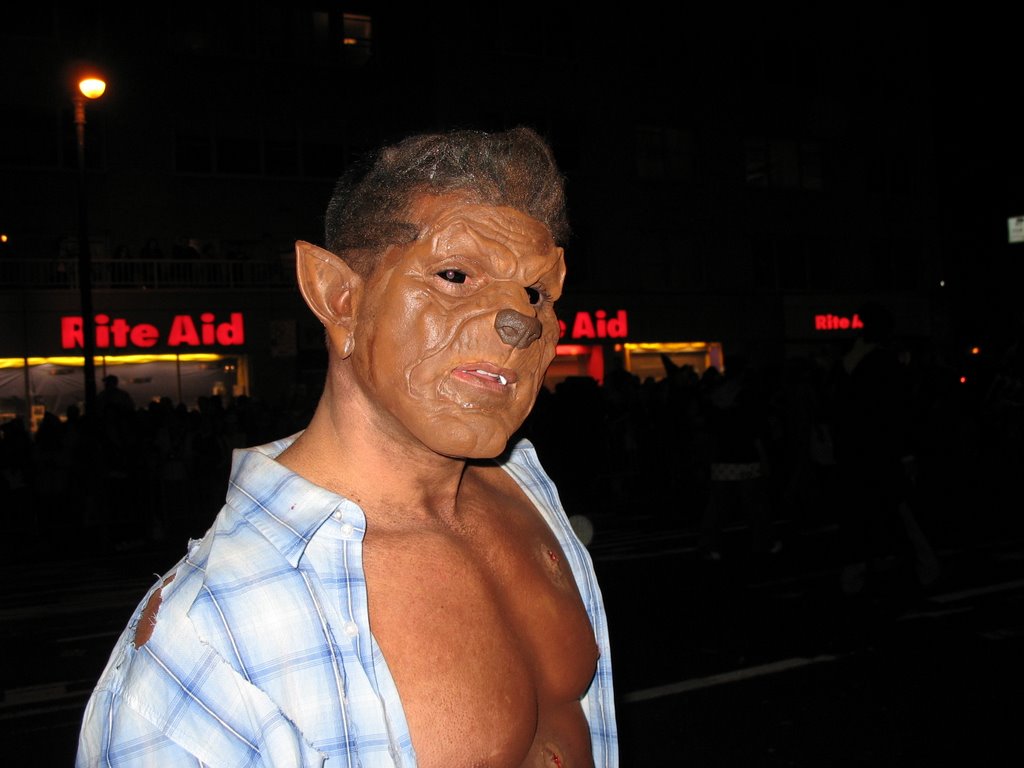
For more photos of the Parade in 13th Street 6th Avenue on Oct 31st Please check the Link Photos.

What is halloween ?

Hallow ,in old English,means holy or sacred. THerefore,Hallow's Eve, or Halloween simply means the evening of holy persons and refers to the evening before all saints Day.I new york the people get together in the village in 6th Avenue arround 13th Street to welcome and see the halloween Parade different Bands and the costumes.

This halloween originated from the Christian word but it became purely material now. It is like the Carnival.


The day before All Saints is called Halloween in the secular world. The name is Christian, Halloween means the eve of All Hallows, the eve of All Saints, but that is the only Christian element in it. All the rest that accompanies Halloween is of pagan origin so it goes back to the time before Christianity. It was a pagan Celtic feast. They believed that after sunset on Samhain, which we now called Halloween, the spirits of the dead and evil spirits roamed the skies seeking to harm humans, especially if the dead had been harmed by them. To protect themselves people disguised themselves by dressing up in costumes and carried lights inside in turnips. In order to turn a pagan feast into a Christian feast the Church placed the feast of All Saints on 1st November, to coincide with the pagan celebration. Children have fun on Halloween now and it is OK but it would be a pity if children did not know the Christian feast at this time, the feast of All Saints. So if your children are celebrating Halloween and know nothing about All Saints, please explain All Saints to them. We are Christians now, so let us not celebrate as pagans. The Church has tried to turn a pagan celebration into a Christian celebration. Is the reverse happening again now? Let us celebrate All Saints.

technorrati

Technorati Profile

Monday, October 30, 2006

Our lady of the Scapular and the Origin of the Carmelites in New York


Our lady of the Scapular Church
Our lady of the Scapular Church was formed in 1889 by the Irish Carmelite priests.
A loft in a Tobacco factory on First Avenue and 29th Street was temporarily hired, and here on April 1889, the Holy Sacrifice of the Mass was for the first time offered in the new Carmelite Parish.
Origin of the St Elias Province of the Order Of Carmelites.
It is due to the memory of those who “Have gone before us signed with the sign of the faith” to say they faced their many arduous duties cheerfully. The charism that handed over to the next generation was taken seriously by the followers and the Carmelites flourished in United States. The full habit of the Friars is brown with a white cloak, this obtaining for them the name of White Friars.
The Irish Carmelites introduced into the United States in 1889.
Early in the year 1887, the Rev. Fathere J.M. McMahon, of New York, whose name is imperishably associated with the Catholic University of Washington, wrote to provincial of the Irish Carmelites who resided in Dublin at the motherhouse for some information concerning the history of the order and especially with regard to its antiquity and to the fact that it has years been in a most particular was identifies with devotion to Our Blessed Lady. A correspondence sprung up in consequence between Fr McMahon and Fr of the Irish province, which ultimately resulted in an invitation of an informal nature being extended to very Rev. Fr. John Barkley and his conferrers to come to New York and, if possible participate in the work of the Diocese. The Very Rev. Michael Moore, then Assistant General of the Order, accepted the invitation and subsequently spent some time with Fr McMahon and the ecclesiastical authorities, discussing possible plans for the introduction of the Order into the New York Diocese.
The late Most Rev. Archbishop Corrigan granted the necessary permission for a foundation on the east side of the city in 29th Street, though it had been father McMahon’s hope that the scene of their labors should be elsewhere. All who are familiar with diocesan topography of New York, know that the present Carmelite parish is merely the Eastern end of the great Parish of St Stephen’s and includes in its limits the principal charity hospital of the city- Bellevue.
Early in the year 1889 that the first band of Irish Carmelites reached New York. There were four in numbers, viz., Rev. Fathers John Barkley, Paul McDonnell, Edward Southwell and Michael Daly. The Our Lady of Scapular Church blessed and dedicated on December 22,1889.
(Article source:- The Catholic Church in the United States of America,1908,Vol.I the Religious Communities. P.111)

Friday, October 27, 2006

Your faith has saved you-30th Sunday YearB homily


Your Faith has saved you!
Dear brothers and sisters in Jesus Christ,
Back in the late 1700’s a man named John Newton worked hard to destroy the Christian faith. He was an alcoholic and a moral libertine. By the grace of God he was rescued, restored, healed, and given the sight to see what he was and what God wanted him to be. In his gratitude he wrote a hymn the words of which you will recognize:
“Amazing grace! How sweet the sound That saved a wretch like me! I once was lost, but now am found, Was blind, but now I see.”
Yes dear brothers and sisters, It is difficult to answer “Who is really blind, and who really sees?”
The most debilitating form of blindness is found in folks who think they see the truth when they really don’t. There is a no more pitiable form of blindness than one who thinks he or she has all of the right answers, who thinks he or she knows all that one needs to know about God, about Jesus Christ, about the Church and about religion…but really doesn’t.
Today’s gospel account bids us to see and recognize ourselves as Bartimaeus, the blind beggar sitting on the roadside in Jericho.
I want you to notice some points out of today’s gospel account. The first and the most important point is that Bartimaeus knew he was blind. Do we know that we really don’t see reality as Jesus sees it, that we miss seeing the works and the hand of God in our lives, that we’re bedazzled and blinded by the glitz and glitter of this world, and that our souls are surrounded by a spiritual darkness, and that we often do not let the light of Christ illumine our way through that darkness? Do we realize we are blind when it comes to seeing ourselves as Jesus sees us?
Secondly: those around Bartimaeus tried to hush him up and keep him away from Jesus. It’s significant because that’s the situation in which we find ourselves today. There are a whole lot of voices and forces attempting to keep us from contacting and personally encountering Jesus Christ. Bartimaeus took the courageous risk of going against the crowd. In faith he approached Jesus. He didn’t wait but ran to Jesus.
Next, we notice that Jesus does something he rarely does. He stops in his tracks. Then he tells them to bring the blind beggar to him. Jesus stops what he is doing to put himself at the disposal of someone in need, especially those who call out to him for help. Jesus stopped everything to pay personal attention to him. I have no doubt whatsoever that you are just as important to Jesus as was Bartimaeus and that, if you call out to Jesus, He will drop everything to give you the same level of attention, love and compassionate care as He gave to Bartimaeus.
Jesus stresses that it is the man’s faith that has saved him. What do we want to do to be saved by our faith? Now here’s the clincher. What does the blind beggar Bartimaeus do when he is told that Jesus is asking for him? It says here that he throws aside his cloak, jumps up and runs to Jesus. What’s so important about that? If he’s a homeless, blind beggar, and is sitting there on the ground at the gate, he would lay his cloak on the ground in front of him so people could throw a few coins at him, so that he would have a few dimes to buy a piece of bread. In other words, that cloak contained his alms, all the money he had in the world. And at the call of Jesus, he instantly throws it all away. He cares nothing for money, everything for Jesus. By this simple action, Mark points out how Bartimaeus threw aside material things and went straight to Jesus.
His eagerness is further highlighted by the fact that he jumped up—no slowly getting to his feet with stiff joints after sitting so long by the wayside. No he leapt to his feet and left his material possessions behind on the ground. And he ran to Jesus.
When he recognized Jesus then he called out left everything behind jumps up and runs to Jesus.
So, I think the question for us is do we recognize Jesus as Bartimeaus when Jesus pass us by. Clearly, you have faith in him. Otherwise you wouldn’t be here this cool windy evening. But, how do you see him? What kind of person is Jesus for you? Is your recognition of him, perhaps, confined to Weekend Mass, and that, perhaps, distracted by the thought that you have arranged to go to dinner with some friends? And what about the rest of the week? Do we recognize Christ then? Do we even say “Hi” to him in a daily prayer? We are so distracted, so busy. So much goes on in our lives that, sometimes, it is a real struggle to aver to the fact that Jesus is here in our lives.
Jesus is present in the Word of God. Listening to Scripture, to the word of God: The Vatican Council said, “Christ is present in his word, since it is he himself who speaks when the Holy Scriptures are read in Church.” Let me repeat that. “Christ is present in his word, since it is he himself who speaks when the Holy Scriptures are read in Church.”
We all believe that he is really present in the Eucharist under the form of bread and wine. But, again, a question..... Do we actually grasp the reality of that presence? How does it affect our faithfulness, our commitment? Are we eager to come to church to receive him, body and blood, really present, to have him touch our lives in the deepest possible way, and most of all, do we carry his presence with us out into the wider world? Does it affect how we live for the rest of the week? Does it affect our relationship with family and friends, with neighbors, with co-workers, with strangers?
Remember that Scripture gives us a third way of recognizing the Risen Lord. Jesus himself said, “Whatever you do for the least of my brothers and sisters, you do for me.” He is really present in every human being. Do we grasp that? Does it really affect our relationships with others?
Yes brothers and sisters, today this poor, blind beggar, who has no home, no food, no family, and no security, cries out, “Jesus Son of David, have mercy on me,”. He identifies Jesus as the Messiah and begs for mercy. That is how we are to pray and come before Jesus from now on. So what does this story mean for us? Each one of us needs Jesus, just as Bartimaeus did. Each one of us needs to recognize Jesus in our lives. This Gospel calls us to learn from Bartimaeus--to call out for mercy from our God; to turn away from money and possessions; to run after Jesus; and to ask Jesus for the gift of vision, so that we too can begin to see Jesus standing in our midst saying your faith have saved you go in peace. Amen.

St Stephen's Church


Links for this Information
http://www.churchcrawler.pwp.blueyonder.co.uk/nyc03/nyc0310.htm
http://www.clinton.senate.gov/news/statements/details.cfm?id=241401&&
http://www.carmelitereview.org/issues/v43n2/more-on-scapular-mural.php
http://query.nytimes.com/gst/fullpage.html?res=9F0DEFDD153CF936A35751C1A9669C8B63
http://holyartworks.com/
http://holyartworks.com/ststephenchurch.html
http://www.sacredplaces.org/PSP-InfoClearingHouse/articles/Church%20of%20Our%20Lady%20of%20the%20Scapular%20and%20St.htm
http://www.gothamgazette.com/article//20050822/202/1514
http://www.nyc-architecture.com/GRP/GRP039.htm

Architect:- James Renwick Jr. 1818–95, American architect, b. New York City, grad. Columbia, 1836.
Location:- 151 East 28th Street. Between 3rd and Lexington Avenue.
Date:- 1854
Style:- Romanesque. Between 1840 and 1900, the round-arched medieval style that preceded the Gothic appealed to religious fervor and picturesque sensibilities, becoming a popular prototype for Christian churches in America.
Construction:- Brownstone facade, Cast Iron interior.

Richardsonian Romanesque (1870-1895)
Style named for Henry Hobson Richardson (1838-1886). It is a revival style based on French and Spanish Romanesque precedents of the 11th century. (Romanesque preceded Gothic in European architecture.) Richardson's style is characterized by massive stone walls and dramatic semicircular arches, and a new dynamism of interior space. Continuity and unity are keynotes of Richardson's style. The Richardsonian Romanesque eclipsed both the IInd Empire Baroque and the High Victorian Gothic styles; the style had a powerful effect on such Chicago architects as Louis Sullivan and Frank Lloyd Wright, and influenced architects as far away as Scandinavia.
Style Definition
The late 19th and early 20th century style of Romanesque is a revival of an early medieval style, which was in turn a revival of Roman architecture. This was one of the most popular forms of architecture in the United States during the 1880s, and along with the Chicago School it was the first style applied to tall buildings. Many courthouses and public buildings were built in Romanesque, even in small rural towns.
Distinguishing features include turrets, rounded arches, hipped or pointed roofs, and very heavy rusticated stonework. Proportions in this style tend to run large, both in the overall building form and in the size of the details.
The founder of this style was Boston architect Henry Hobson Richardson, and to this day it is frequently called "Richardsonian Romanesque". His successor firm Shepley, Rutan, and Coolidge contributed to its development, while many smaller firms throughout the United States like Long & Kees adopted the style.

St. Stephen's Church -- Will It Ever Be A Landmark?
By Gary Papush
August 22, 2005
http://www.gothamgazette.com/article//20050822/202/1514
Hundreds gathered in the Capitol rotunda in Washington D.C. this summer, beneath the painting of George Washington and allegorical figures representing the 13 colonies, to mark the 200th birthday of the painter who created it, Constantino Brumidi. Several senators spoke, paying tribute to a man who, Senator Hillary Clinton said, "came to this country to find a better life and, in the greatest tradition of our nation made an indelible mark on our history."
But while Washington has heralded Brumidi, New York, the site of his other major American work, has been less kind. Brumidi's paintings grace the interior of Our Lady of the Scapular and St. Stephen's Church on East 28th Street. But despite 40 years of effort by preservationists, the building is still not a designated landmark. Many in the community, including those of us on Community Board 6, hope the bicentennial of Brumidi's birth will spur the city Landmarks Preservation Commission to act. We think the church is worthy of preserving and would like to see the process that began with Landmarks hearings in the 1960s, move forward.
The delay at St. Stephen's, as the church is popularly called, brings into focus a problem facing landmarking in New York. All too often the landmarks commission, perennially short of staff


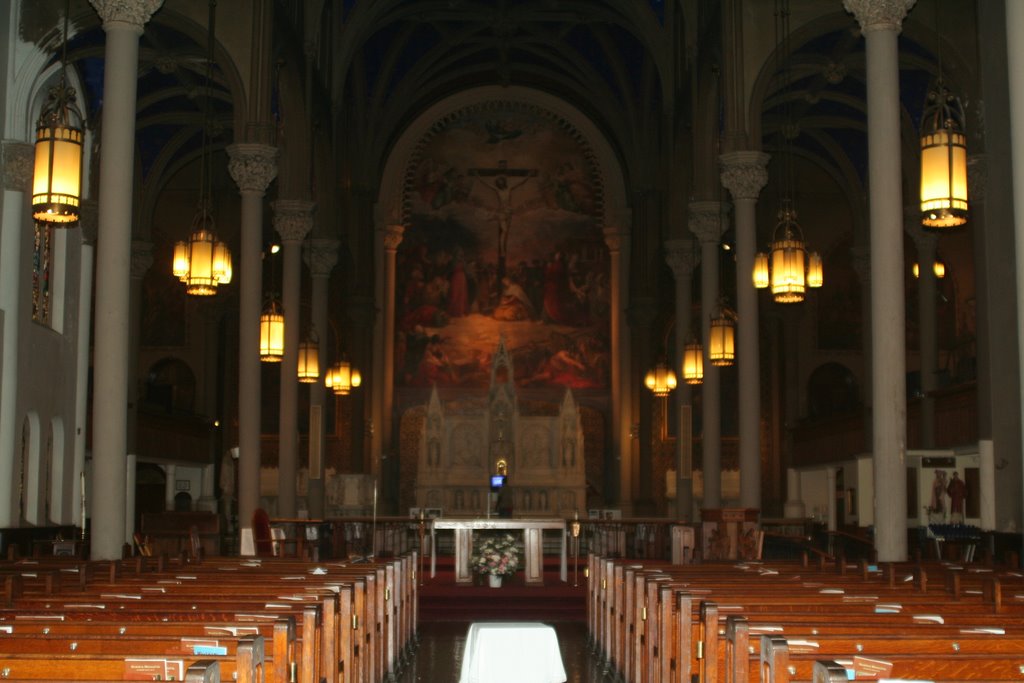
and money, does not act until a crisis is at hand. The case of St. Stephen's also serves as an example of the limits on what the community boards can do in such instances. A Romanesque brownstone church, St. Stephen's was designed and built from 1850 to 1854 by noted architect James Renwick, who also designed St. Patrick's Cathedral on Fifth Avenue, Grace Church in Greenwich Village and the original building of the Smithsonian Institution in Washington D.C. But it is the interior of St. Stephen's that is truly remarkable. Light pours through 100 stained glass windows created by Meyer of Munich, Germany. And then there are the Brumidi's. These include murals - such as a large crucifixion scene over the altar - and paintings depicting a variety of religious themes, including the Stations of the Cross. Brumidi also employed trompe l'oeil. What seem to be sculptures of figures such as David on closer examination turn out to be paintings. Similarly what on first glance looked like columns and stonework throughout the church were actually paintings. Much of this work, though, was covered over in the 1940s.
As he worked at St. Stephen's, Brumidi was also busy at the Capitol, creating not only the paintings in the rotunda but other works in the building, including much of the frieze of American history. Brumidi finished his painting at St. Stephen's but died in 1880 before he could complete his Capitol frieze.
Beyond its artistic merit, St. Stephen's played a role in New York's religious and political life. In 1860, it was the largest Catholic parish in the country with 24,000 members. The pastor at the time, Edward McGlynn, had an interest in the arts and brought Brumidi to the church. Later McGlynn became active in social and economic issues of the day, taking positions that ran counter to the teachings of the Catholic Church at the time. This led to his excommunication and departure from St. Stephen's.

So, given such an illustrious architectural, artistic and social history, why hasn't the landmarks commission acted on the designation? After all, no one has publicly come out in opposition to the idea.
For one thing, the building has not been in any immediate danger. My experience with the Landmarks Preservation Commission is that it rarely rejects a building for landmarks designation after holding a public hearing. Even if there is not enough support to landmark the building, the commission will usually not vote to deny the application -- unless the owner wants to tear the structure down. This seems to largely be a question of staff and money. Even in good financial times, certain city agencies get the short end - and the Landmarks Preservation Commission is among them. In the case of St. Stephen's, the Archdiocese of New York, which owns the building, has never expressed any interest in altering or destroying it. And so the landmarks commission has never been forced to act.
And landmarking St. Stephen's poses at least one major problem. The hearings in the 1960s dealt with designating the exterior of the building a landmark, but much of the current research and interest in the building centers on the interior, particularly the murals. The city's landmarks law does allow that interiors or parts of interiors of buildings be designated as landmarks - but, perhaps because of constitutional concerns about the separation of church and state -- not if the building is an active house of worship. And mass is still held at St. Stephen's every day.
A campaign is underway to raise millions of dollars needed to restore the murals. Some of the framed paintings have already been restored. Apparently there are some federal funds available to restore interiors of houses of worship - as long as the money goes to art and architecture, rather than promoting religion. Protecting the exterior of the church by designating it a landmark might generate publicity that would help the fundraising campaign for the murals.

This year, two things sparked renewed interest in getting landmark status for St. Stephen's. One is the Brumidi bicentennial. The 200th anniversary of his birth seemed to present a good opportunity for honoring Brumidi's work and doing what we could do, within the bounds of the law, to protect it. The other is that the archdiocese has been closing schools and merging churches. Although they have not said they have any plans to close St. Stephen's - which is already the result of a merger between two congregations - the downsizing has renewed concerns about the fate of St. Stephen's
Responding to these events, the community board examined the issue for about two or three months earlier this year. Then, we passed a resolution endorsing landmarks designation for the facade of St. Stephen's, supporting the restoration work on the murals, and urging that the interior be landmarked if St. Stephen's ever ceased to be a church. Our interpretation of the law is that the restriction on landmarking for churches, synagogues, mosques and so on only concerns active houses of worship. If the congregation was no longer in the St. Stephen's building -- even if the archdiocese still owned it -- we feel the interior would be eligible for landmarking, but I guess that would be for the lawyers to determine.
As much as the community board supports landmarking for the church, our role, unfortunately, is limited. The city charter gives the community boards only the authority to recommend. Our resolutions have the power to express the point of view of the community but they do not have the power of law.
This is in contrast to changes in land use or zoning, the city's process -- the Unified Land Use


Review Process, or ULURP -- requires that the community board review and pass resolutions supporting or opposing the recommended change. The city does not have to follow our recommendation but the very fact that it is required by law to get our opinion gives our viewpoint more influence than it would otherwise have.
Decisions on landmarks, though, are not part of this process. The community board does not have to be consulted.
Any courtesy or consideration the Landmarks Preservation Commission gives to the community boards is voluntary on their part. Community Board 6 has passed resolutions asking that landmarks be put under some sort of review similar to ULURP where an application would have to go to the community board for recommendation before landmarks ruled on it. This would require that they have our input, but, unfortunately, this idea hasn't gone anywhere. In the meantime, we do try to consider any landmark decisions that arise in our area.
We have had more success with the so-called Certificate of Appropriateness, which comes into play when an owner wants to make changes to a landmarked building. Owners applying for one are told to first go to their community board. This is a voluntary process and a new policy, but, as far as we are concerned, it is working so far.
Despite the limits on our role in designating landmarks, we do get involved. St. Stephen's is one example. Another is Stuyvesant Town. Met Life, which owns the housing complex, is opposed to making the development a landmark, including the outside green spaces, or ovals. The community board did vote to landmark, but the Landmarks Preservation Commission has not yet put it on their calendar. When they do act on this, on St. Stephen's and on other landmarks issues on the East Side, we at Community Board 6 hope they will consider our recommendations.
Gary Papush is chair of the parks and landmarks committee of Community Board 6 on Manhattan's East Side.
Church of Our Lady of the Scapular and St. Stephen
This Romanesque Revival-style church, built in 1854 to the designs of architect James Renwick, Jr., is an example of robust architecture that set the pace for the Victorian Romanesque. Equally important is the church's painted interior decorative scheme that was executed after the Civil War by the renowned artist, Constantine Brumidi (1805-1880), considered the last master of the Italian Baroque tradition. Renwick's strongly articulated tripartite composition inventively employs a lively pattern of repetitive round-arched motifs derived from the mature German Romanesque cathedrals.
Inside, plastered cast-iron columns with elaborate foliated capitals support multi-ribbed vaulting. The nave is lit by over 100 figurative painted stained glass windows by Meyer of Munich installed in the 1860s. After completing over $1 million in roofing and waterproofing work in the last year, the parish is now planning the conservation of the interior.The church is nationally significant for its decorative scheme commissioned in 1866 from Brumidi, consisting of a huge mural of the Crucifixion over the High Altar, forty-five murals and paintings around the walls, and a scheme of architectural illusion, called trompe l'oeil.Brumidi is renowned for his extensive murals in the U.S. Capitol that were recently restored.
The grand conception for the interior at St. Stephen's is a rare surviving example of Brumidi's work in churches. Initial probes by conservator Constance Silver of Preservar indicate that the overpainted trompe l'oeil scheme can be reclaimed. The urgency of conservation treatments for the flaking wall paintings has spurred the parish to begin a pilot project this summer with internally raised funds that will restore the100-foot entry. A conservation plan will also be developed for the interior painting and stained glass.
The building is located at 149 East 28th Street between Lexington and Third Avenues, in the Gramercy Park area of Manhattan. The sanctuary is normally open to the public for an hour before and an hour after each daily Mass (Monday through Friday 11.30:00 a.m-2pm; Saturday 4:00 p.m..; and on Sundays from 7:30 a.m. to 12.30 p.m.). For additional information, call the Parish Office at (212) 683-1675.

Constantino Brumidi
Constantino Brumidi, 1805-1880, was born in Rome and studied painting and sculpture at the Academia de San Luca. He painted frescos in several Roman palaces and in the 1840’s he was commissioned by Pope Gregory XVI and later by Pope Pius IX to work at the Vatican. In 1852, at the age of forty-seven, Brumidi emigrated to the United States. “I no longer have any desire for fame and fortune,” he remarked upon arriving in the United States. “My one ambition and my daily prayer is that I may live long enough to make beautiful the Capitol of the one country on earth in which there is liberty.”
His Apotheosis of George Washington in the Capitol Rotunda reflects that spirit of freedom, with his magnificent fresco of a seated Washington surrounded by a semi-circle of 15 maidens. Seated at his right is Liberty and at his left a trumpeting winged Victory. The other 13 maidens represent the original 13 states. It is an allegorical fresco of George Washington, whose deeds and virtue have found him worthy of ascending into Heaven.
Brumidi dedicated 27 years to decorating the United States Capitol building. He executed frescos in the north corridor, now called the “Brumidi corridor.” The Presidents room, the


Senate reception room and many other committee rooms and corridors are adorned with his work. Many biographers refer to him as the “Michelangelo of the Capitol.” The 108th United States Congress unanimously recognized the life and work of Constantino Brumidi (HCR 264 & SCR 61). Some 43 murals, paintings and trompe l’oeil were completed at St. Stephens while Congress was in session. When in recess, he would return to the Capitol to complete his work there, earning the same $8 and $10 per day as the legislators.
Brumidi is recognized not only as the last great Baroque artist but also as an expert in trompe l’oeil, “trick of the eye” illusionary painting. His St. Michael, Archangel, is an extraordinary example of two-dimensional art which gives the illusion of being a three-dimensional marble sculpture. One of his most fascinating and spiritually engulfing murals is the largest crucifixion mural (22 ft x 44 ft.) in the United States. Located behind the altar at St. Stephen’s, an unusual aspect of his work is the placement of Mary Magdalene in the center of the mural, directly beneath the Crucifixion.
Our Lady of the Scapular and St Stephen (151 East 28th Street) This brownstone church was built in 1854 in a Romanesque style to the designs of James Renwick Jr. Outside it looks rather dull but the painted interior comes as a complete surprise. Thin cast-iron columns divide the interior into nave, aisles, crossing and transepts, and chancel with double aisles, the outer ones with galleries. The piers also carry large foliated capitals and a fine lierne-vault with bosses.
The frescoes and murals are all the work of Constantine Brumidi, commissoned in 1866 and including a huge altarpiece of the Crucifixion in the style of the Italian baroque. In addition most of the windows have stained glass from Meyer & Co of Munich, Germany, and installed in the 1860s.

Thursday, October 26, 2006

In whose Hand


Hands!


A basketball in my hands is worth about $19.A basketball in Michael Jordan's hands is worth about $33 million.It depends whose hands it's in.


A baseball in my hands is worth about $6.A baseball in Mark McGuire's hands is worth $19 million.It depends on whose hands it's in.


A tennis racket is useless in my hands.A tennis racket in Venus Williams' hands is a championship winning.It depends whose hands it's in.


A rod in my hands will keep away a wild animal.A rod in Moses' hands will part the mighty sea.It depends whose hands it's in.
A sling shot in my hands is a kid's toyA sling shot in David's hand is a mighty weapon.It depends whose hands it's in.


Two fish and 5 loaves of bread in my hands is a couple of fish sandwiches.Two fish and 5 loaves of bread in God's hands will feed thousands.It depends whose hands it's in.


Nails in my hands might produce a birdhouse.Nails in Jesus Christ's hands will produce salvation for the entire world.It depends whose hands it's in.


As you see now it depends whose hands it's in.So put your concerns, your worries, your fears, your hopes, your dreams, your families and your relationships in God's hands because...It depends whose hands it's in.

It Depends on WHO'S Hands it's in!!

Wednesday, October 25, 2006

Constantine Brumidi


Constantine Brumidi
Brumidi was an Italian who was born in 1805. His artistic talents brought him to the attention of Pope Pius IX and they became close personal friends. When the revolutionaries in Italy were trying to overthrow the authority of the Papal State, Brumidi, because of his intimate connection with the Pope, had to flee the country. He arrived in the United States in 1852, and immediately indicated his desire to become a citizen. In 1868 he began the murals in St Stephen’s Church. The best known of these , the crucifixion over the high Altar is reproduced in natural color for the first time in the Centennial Journel(1948). All of the murals, two large canvasses over the side altars, and the stations of the cross are the work of Brumidi. He later distinguished himself by his work in the Capitol Building in Washington, D.C., where he died in 1880.

Pastor Dr Edward McGlynn


Pastor Dr. Edward McGlynn.
He was born in New York City September 27, 1837. His parents came from Donegal., Ireland in 1824. He ordained a priest March 24, 1860 in Rome and soon afterwards returned home to New York. He was first assigned to St Joseph’s Parish on Sixth Avenue. In January 1866, at the age of 29 he became the second pastor of St Stephen’s Parish. It was estimated at that time, that there were about 25000 to 28000 parishioners.
It was also during the pastorate of Father McGlynn that the present altars were constructed in the Church. The high Altar of pure statuary marble was erected under the supervision of Patrick Keeley a well known architect of the day at a cost of $30,000. It was completed in 1870.
Since it was obviously impossible for one parish to care for so many thousands of souls, early in 1867 Archbishop McClosky created a new Parish to the south, Parish of Epiphany. It was under Dr McGlynn that the extension of the church was completed. He also supervised the Church appointments- altars and decorations.
In January 1887, he withdrew from St Stephen’s because of a controversy with his bishop, and in January, 1895, was appointed pastor of St Mary’s Newburgh, NY. Five years later, on January 7, 1900, his funeral was held,- as was fitting,- from St Stephen’s , the scene of his greatest labors.

St Stephen's Church


The History of
St Stephen’s Church

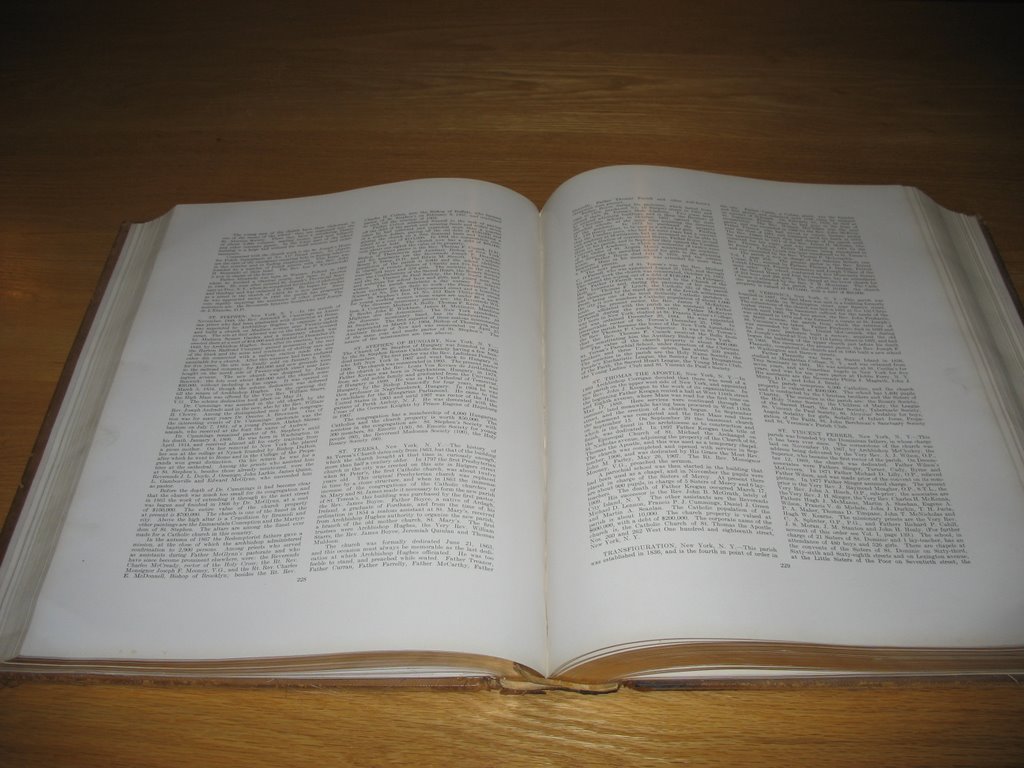
The Catholic Church in the United States of America., Vol.II , The province of Baltimore and New York, 1909, The Catholic Editing Company, New York. P 228 Para 4-11

St Stephen- New York, NY- In the Month of November, 1848,Rev.Jeremiah W. Cummings, an American priest who had been graduated with distinction at Rome, was appointed by Archbishop Hughes to Organize a parish and build a church on Madison Avenue near twenty eighth Street. The site at first selected was on the block now covered by Madison Square Garden and at a temporary Church was erected there at a cost os $14,000 and dedicated on December 23,1849,by Archbishop Hughes. Soon after its erection, however, the Harlem Railroad company gained possession of the rest of the block and the noise and confusion of shifting cars and other din connected with a railway station made the site unsuitable for a church. After this nuisance had been endured for five years, the site was finally sold on January 6, 1853, to the railroad company, for $46,000 and a new grounds were bought on the north side of Twenty eighth street near Lexington Avenue. The new church was designed by James Renwick; the lots cost about $40,000 and the church some $50,000, with out including a fine organ. It was opened on March 5, 1854, though the solemn dedication was deferred till the return of Archbishop Hughes. On the opening day the High Mass was offered by the Very Rev. William Starrs,V G. The Solemn dedication took place on May 21,1854.
Dr Cummings remained pastor of St Stephen’s until his death, January 4, 1866. He was born in Washington in April,1814.
Before the death of Dr Cummings it had become clear that the church was much too small for its congregation and in 1865 the work of extending it through to the next street was began and finished in 1866 by Dr McGlynn, at the cost of $100,000. The entire value of the church in 1909 was 700,000.
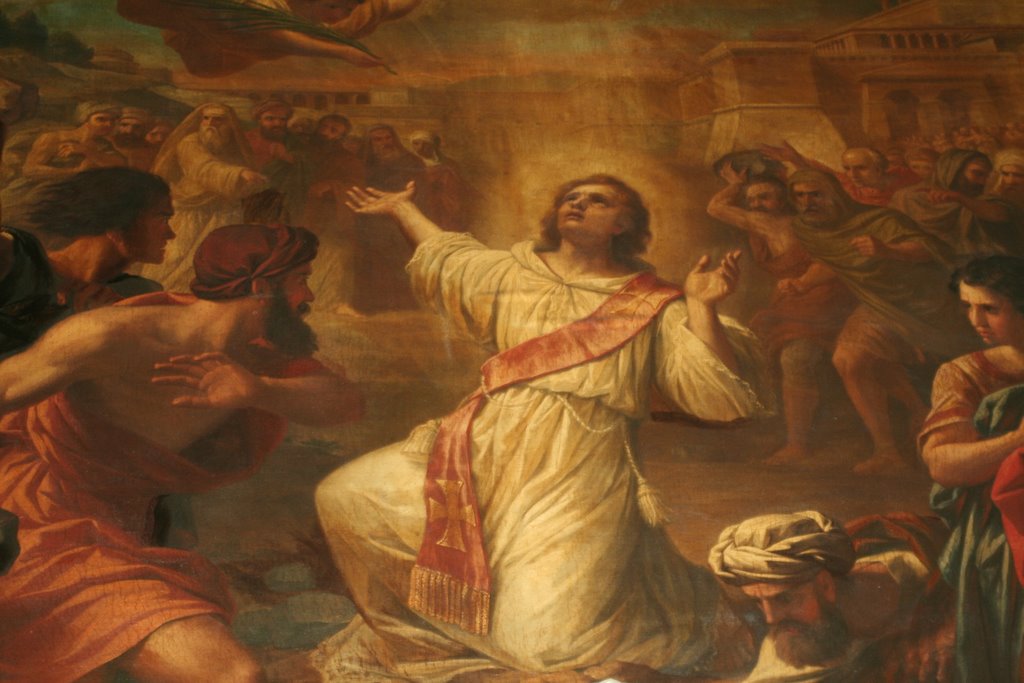
The Church is one of the finest in the city. Above the high Altar is a crucifixion by Brumidi and other paintings are Immaculate Conception and the Martyrdom of St Stephen. The altars are among the finest ever made for a Catholic Church in the Country.
The Pastors and Assist Priests of St Stephen’s Church

First pastor:- Dr. Jeremiah W. Cummings,D.D., December,1849 to January 1866, under whom served Rev.Fathers Joseph Andrade, Ambrose Manahan,D.D., James Quinn, John McCarthy, John L. Doyle, Louis Gambosville, Wm.H. Clowry, John Arsenigo, and Edward McGlynn D.D.
Second pastor:- Rev. Edward Mcgynn,D.D., January 1866 to January 1887
Third Pastor:- Rev.Charles H. Colton , September 1887 to 1903
Fourth Pastor:- Rt. Rev. Thos. F. Cusack, D.D., 1904 to 1915
Fifth Pastor:-His Eminence, Cardinal Patrick j Hayes, D.D., 1915 to 1919
Sixth Pastor:- Rev. Francis P.J. Cummings,1919 to 1922
Seventh Pastor:- Rt.Rev. William A. Courtney, Sept.1922 to August,1948
Eighth Pastor:- Rev. Michael A. McGuire September 15,1948

Rev. Dr Cummings

Jeremiah Cummings was born at Washington, D.C., April 5, 1824. He was of North Ireland Protestant stock, his ancestors having immigrated to this country from the North of Ireland about the year 1782, during the heat of the Revolutionary War. Shortly before the birth of Father Cummings, his mother entered the Catholic Church, which resulted in an estrangement from her family. At the age of fourteen he began his studies for the Priesthood. He was ordained January 3rd, 1847 by Monsignor Brunelli, and received his degree of Doctor of Divinity at the hands of Pope Gregory XVI. Returning to America, he was assigned to the Cathedral parish of the Diocese- in those days, St Patrick’s in Mott Street. Shortly thereafter he was assigned to prepare for the founding of St Stephen’s Parish; He threw himself with ardor into the work of raising funds and getting his Parish started. The Parish of St Stephen’s was cut out of the Parish of St John the Evangelist which at that time was situated at the present site of the Cathedral at 50th Street and Fifth Avenue, and the Parish of the Nativity on lower Second Avenue. Work had already begun on the extension of the Church when on January 4, 1866 Dr Cummings died. He was buried on January 8th from the church he had founded and although it was bitterly cold because of the portions of the walls were open with the work of extension, the church was thronged with people. (From the “Centennial Journal, 1848-1948”, Nov.29th, 1948 P.13)

Tuesday, October 24, 2006

Saturday, October 21, 2006

Wednesday, October 18, 2006

Tuesday, October 17, 2006

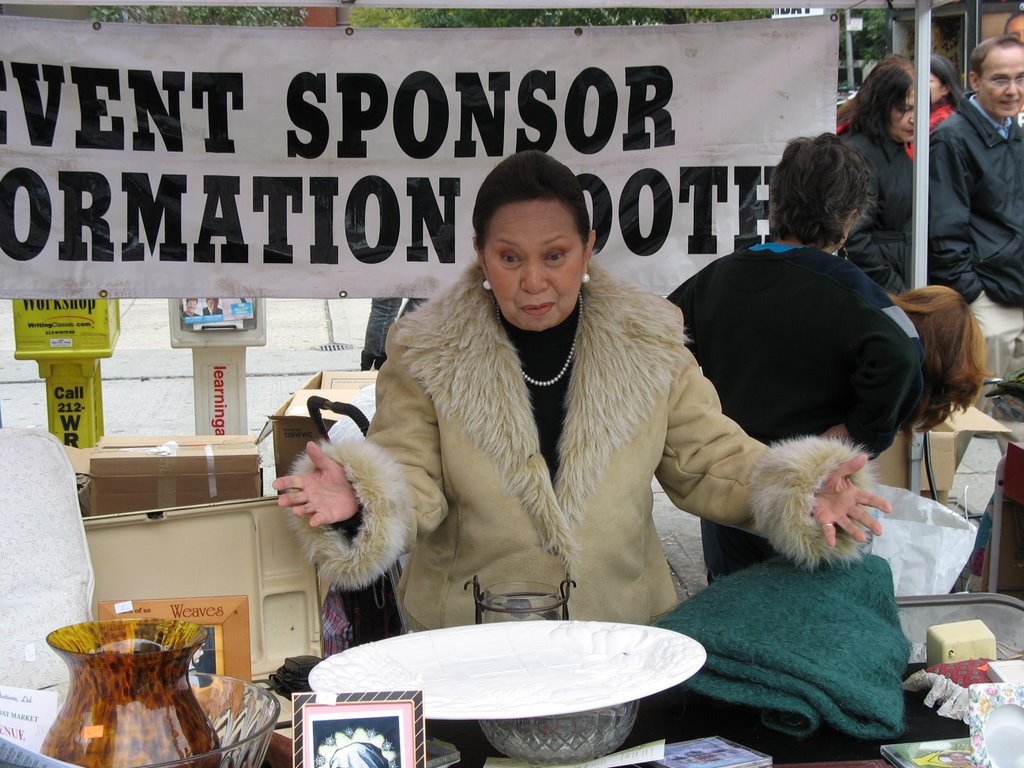
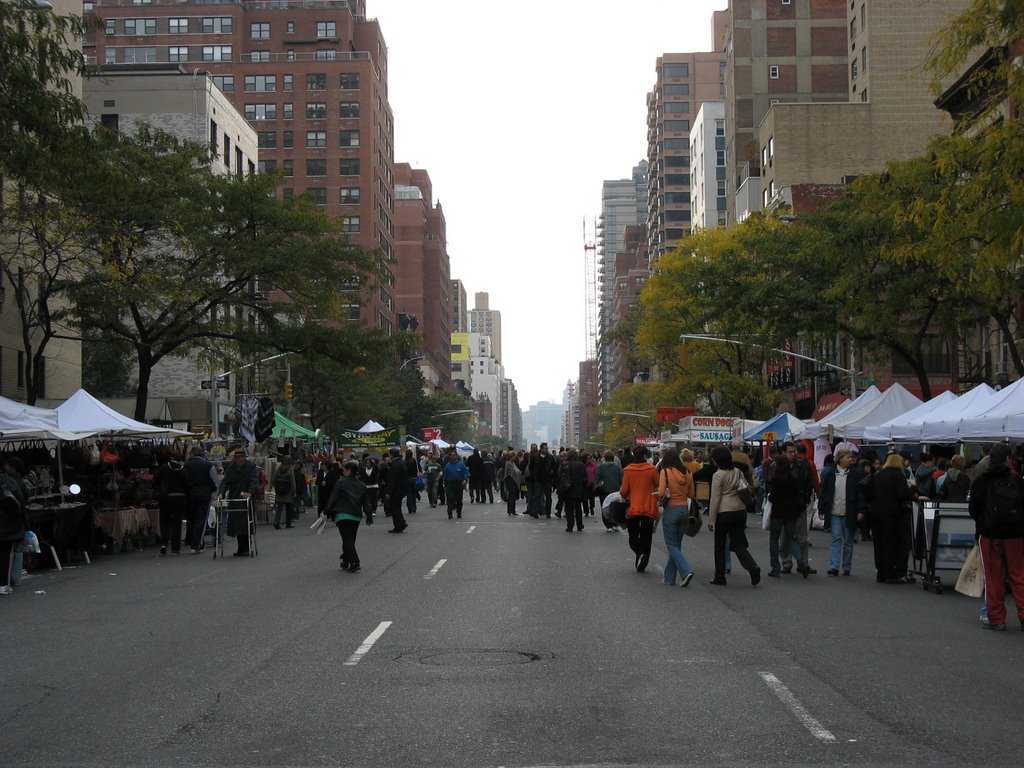
Flee Market